Planned actions include a free digital platform, informal meetings, training workshops for citizens and professionals, and local protection desks
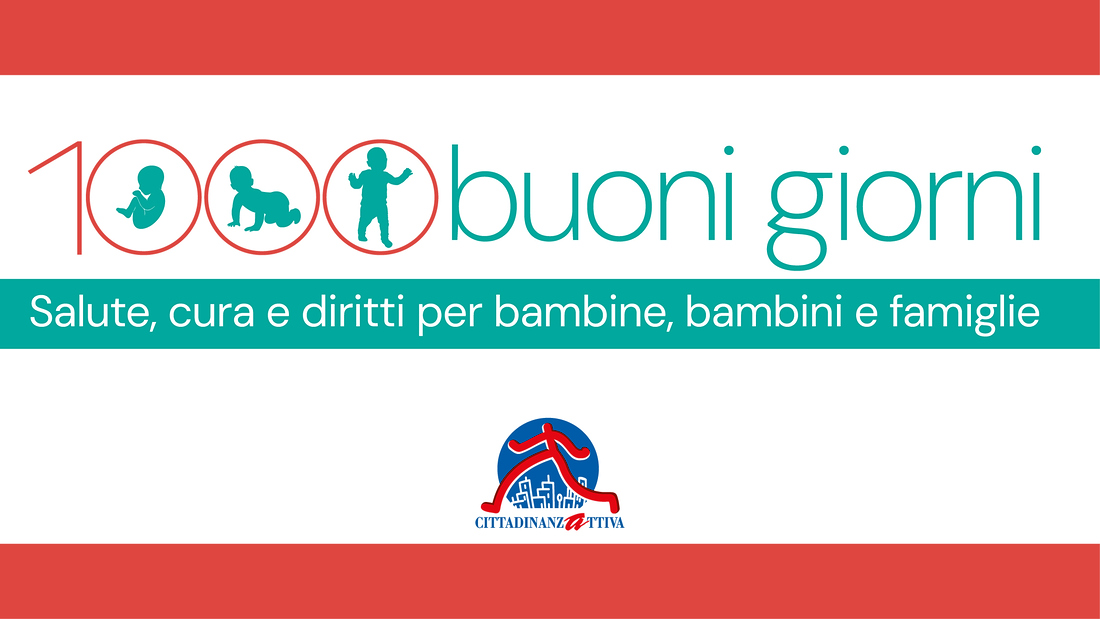
Promoting a program of concrete actions to protect the first thousand days of life, from conception to two years of age, and to assert the right to the best possible start in life—a right that is currently highly fragmented and conditioned by the place of birth and family income. This is the goal of the "1000 Good Days" campaign, presented today by Cittadinanzattiva with an event at the Nassirya Hall of the Senate. The campaign is supported by a large Board of entities that, together with Cittadinanzattiva, will develop a civic platform of multidimensional interventions aimed at connecting families, institutions, healthcare professionals, educators, the Third Sector, and local communities, in order to help transform the first 1000 days into a concrete lever for social equity, public health, and welfare innovation.
The civic analysis of regional models
Strong territorial differences persist in access to 0-3 early childhood education services, family clinics (consultori), perinatal mental health protection services, prevention pathways, and parenting support. A child's development opportunities all too often continue to depend on where they are born, family income, and the capacity of territories to guarantee accessible and integrated services. The civic analysis conducted by Cittadinanzattiva on Regional Prevention Plans highlights, in fact, a deep heterogeneity across the national territory. The resulting "classification" refers only to the relevance given to the theme of the 1000 days in regional planning, not to the actual outcomes on the population. Regions such as Lombardy, Veneto, Lazio, Campania, Piedmont, Basilicata, and Umbria focus on dedicated programming, which sees the adoption of specific and structured projects on the 1000 days with dedicated monitoring systems. Abruzzo, Liguria, Marche, and Molise follow instead a model centered on family clinics and the birth path, valuing these structures as presidia destined for this specific timeframe. Emilia-Romagna, Friuli Venezia Giulia, Tuscany, Valle d'Aosta, and the Autonomous Provinces of Trento and Bolzano apply the integrated socio-health model, networking family clinics, Family Centers, mental health, educational services, and local communities. Sardinia, Sicily, Puglia, and Campania adopt an approach oriented toward social equity, especially to the benefit of inland areas and vulnerable families.
"The health protection of the youngest and support for families cannot depend on the zip code or socio-economic conditions. Through this program, we want to put citizens' rights back at the center and activate concrete tools for listening and orientation. We ask institutions for a stable national governance on the first 1000 days, the strengthening of the proximity network, starting from family clinics as integrated territorial hubs, and the simplification of procedures to access services and subsidies. Investing early is an indispensable social duty to build a fairer, more cohesive, and supportive community," declares Anna Lisa Mandorino, General Secretary of Cittadinanzattiva. "At the European level, we have proposed the adoption of an 'EU First 1000 Days Act', capable of transforming the current European recommendations on the subject into truly enforceable rights, introducing common standards on maternal-child health, nutrition, education, prevention, and access to services. The goal is to overcome the fragmentation of policies, strengthen territorial equity, and commit Member States to developing integrated national strategies on the first 1000 days. An 'EU First 1000 Days Act' would represent not only a social measure, but a strategic investment in European human capital, capable of reducing inequalities, preventing intergenerational disadvantage, and building a fairer Europe."
The concrete actions of the “1000 Good Days Lab” program
The organization is launching a civic platform of multidimensional interventions involving families, institutions, healthcare staff, and educators. The main activities include:
- participatory local workshops, informal meetings, educational and informative paths dedicated to parents and families, but also to healthcare, social, and educational workers, on the topics of early prevention, perinatal mental health, multidisciplinary care, equity in access to local socio-health services, and the early identification of potential social distress situations experienced by families;
- protection desks for families encountering difficulties in accessing services, economic support, care pathways, or information about their rights;
- a free digital platform that collects informative materials, videos, scientific content, multilingual tools, and local good practices dedicated to the first 1000 days;
- a widespread communication campaign dedicated to public awareness on the topics of early prevention, children's rights, parenting, territorial equity, and family welfare.
Current members of the Board: AIFEC, ANCI, Centro per la Salute delle Bambine e dei Bambini - ETS, CNOAS, CNOP, Donne in Campo - CIA, Farmaciste insieme, FIASO, FIMMG, FIMP, FNOPI, FNOPO, FOFI, Giovani Farmacisti Fenagifar, Gruppo CRC, Gruppo Nazionale Nidi e Infanzia, Istituto Superiore di Sanità, Riabitare l'Italia, SIGO, SIMG, SIN, SIP, Emmanuele Pavolini, Full Professor of Economic Sociology at the Department of Social and Political Sciences of the University of Milan, Manuela Stranges, Associate Professor of Demography at the Department of Economics, Statistics and Finance of the University of Calabria, and Paolo Siani, pediatrician and former vice-president of the Parliamentary Commission for Childhood and Adolescence.